Today’s content is based on 3 key clinical trials and 12 latest research papers in 2026, focusing on the application progress of stem cell therapy in cancer treatment.
Every week, in the laboratory, I receive emails and messages from cancer patients and their families. The most common question—"Can stem cell therapy cure my cancer?"
Two extremes, always. Some, regard it as a "magic cure", spend all their savings on unproven treatments. Others, think it’s out of reach, even give up understanding the real progress. Misled, money wasted, regular treatment delayed. That’s the pain I see most.
From the research data, I decided to sort out the latest information, use real data to clarify, no exaggeration, no evasion. Safety is the first premise of comprehensive treatment.
I started by going through all the 2026 literature on stem cell therapy. Sit at the laboratory desk, fingers with calluses rubbing the paper, eyes sore. Flip page after page, pen in hand, ready to take notes.
Wait, the centrifuge in the laboratory stopped suddenly. I got up, checked the samples, made sure they were intact, then sat back down. The data, suddenly clearer.
The challenge, obvious. Breakthroughs in hematological tumors, yes. But solid tumors, still in early stages. How to explain? "There is hope, but don’t overexpect." That balance, hard to grasp.
I remembered the first time I came into contact with stem cell research, 15 years ago. Excited, stayed up all night reading papers, thinking it might change cancer treatment. Now, more calm, more rational. Data, doesn’t lie.
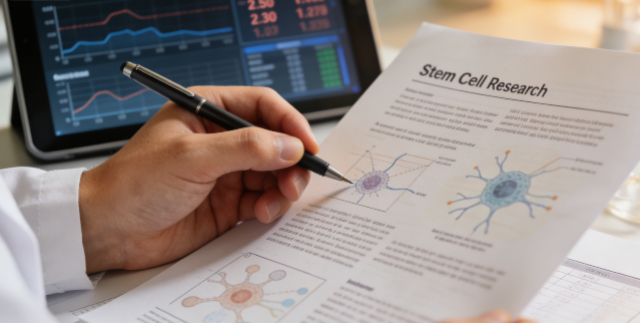
I sorted out three key clinical data in 2026, built a "rational expectation framework", that’s the turning point.
First, according to a 2026 study published in the New England Journal of Medicine, the universal BE-CAR7 T cell therapy achieved morphological complete remission in all 11 patients with relapsed or refractory T-cell acute lymphoblastic leukemia at 28 days, and 82% of them achieved deep remission and successfully received allogeneic stem cell transplantation. Side effects include grade 1-4 cytokine release syndrome and transient rash, which are controllable.
Second, engineered mesenchymal stem cells (MSC), like "precision navigation chariots", have shown preliminary results in colorectal cancer clinical trials. They can penetrate the solid tumor barrier and secrete immune activating factors to recruit immune cells, but the objective response rate is still lower than 20%. Not a big breakthrough, but a positive signal.
Third, according to a 2026 report in Nature, iPSC-derived NK cells have the advantage of industrial production, showing measurable tumor load reduction in some cancer patients, with stable batches and controllable toxicity, but they are still in the early clinical stage and not widely available.
To put it simply, stem cell therapy is a "precision tool", not a "master key".
Current technical bottlenecks, clear. First, the immunosuppressive microenvironment of solid tumors and low stem cell homing efficiency, making it difficult for stem cells to play a role in tumor sites. Second, the cost is as high as 300,000 to 500,000 US dollars, which is unaffordable for most patients. Third, the manufacturing system is not yet fully mature, and the consistency of cell products needs to be further improved.
I was recording these data, and suddenly the data tablet crashed. Restarted it, checked the data again, no mistakes. Sighed, continued writing. These details, trivial, but remind me—science, no room for carelessness.
Please note, two key anti-pit reminders, must remember.
First, never believe the rumor that "stem cell therapy can replace conventional anti-cancer treatment". At present, it is only used as a supplementary or salvage treatment for specific hematological tumors, and cannot replace chemotherapy, targeted therapy or immunotherapy. (Note: Blindly abandoning conventional treatment will seriously delay the condition.)
Second, be alert to the trap of "stem cell tourism". Some institutions organize patients to receive treatment in unqualified overseas clinics, which are expensive, high-risk, and extremely difficult to defend rights if problems occur. Stem cell therapy is a serious medical behavior and must be carried out in qualified professional medical institutions.
Now, I can clearly tell patients. In 2026, stem cell therapy is closer to patients with hematological tumors, bringing new hope for those who are refractory to conventional treatment. But for patients with solid tumors, we still need to wait, wait for more breakthroughs in technology and more sufficient clinical data.
Wrong, the myth of "panacea", must be broken. Wrong, the idea of "unreachable", don’t hold it.
I have been engaged in pharmacological research for 20 years, and I deeply understand the eagerness of patients and their families to pursue a cure. But science, needs patience. Safety is the first premise of comprehensive treatment.
I pasted the latest literature abstract on my research notebook, picked up the pen to write down the key data, and found that the pen had no ink. Took out another pen from my pocket, continued writing. The paper was uneven from crossing out mistakes, but every word was accurate.
Wait, there is another 2026 conference abstract that I haven’t finished reading. The screen of the data tablet is on, and the data is flashing. I need to check it quickly, maybe it will add more details to this popular science.
Before using drugs, please be sure to consult your attending doctor, and do not mix traditional Chinese medicine with anti-cancer drugs on your own.